When The Smoke Clears
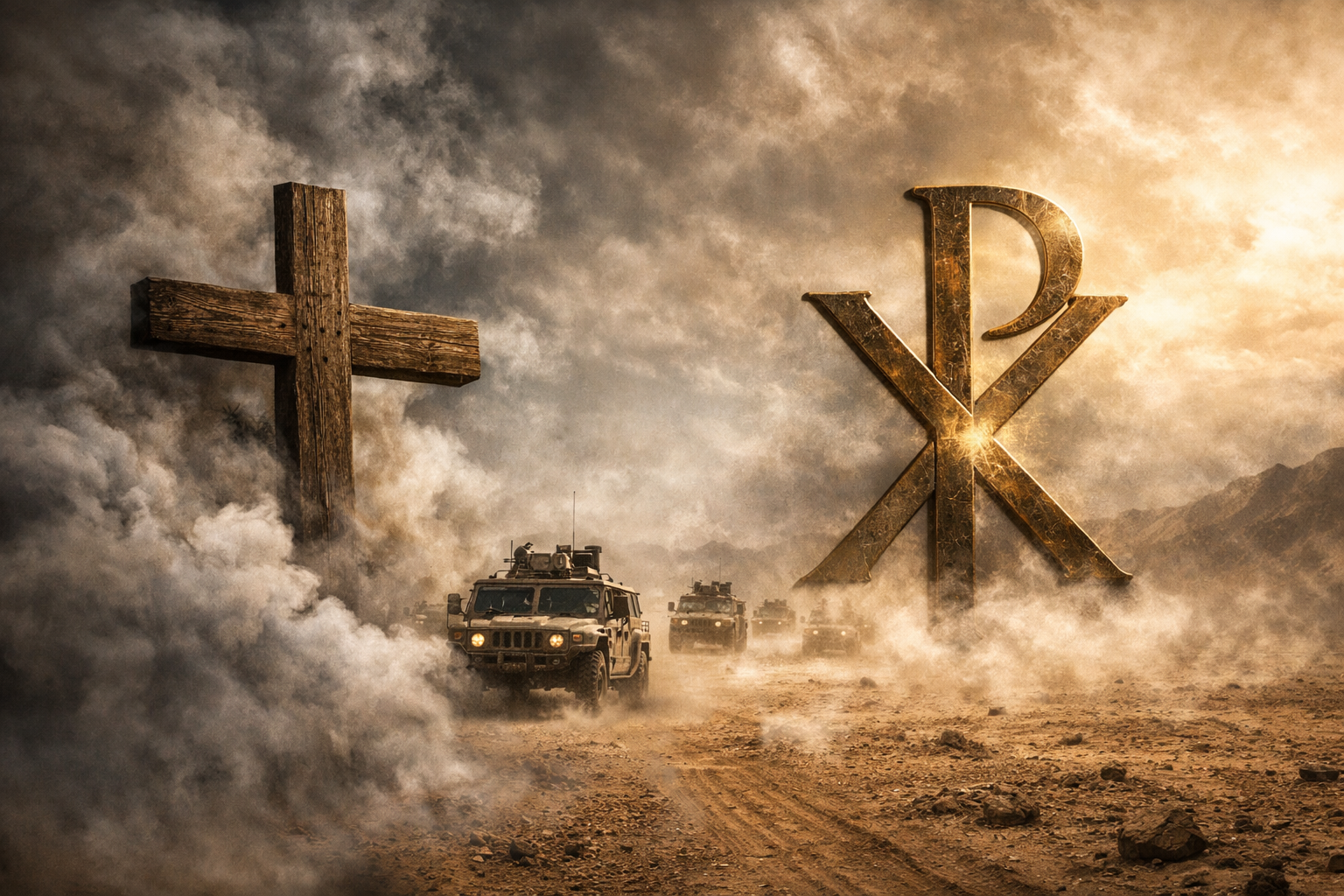
I remember when I was in the Army, deployed to Iraq. I was riding in a convoy, sitting in the passenger seat with my weapon ready, scanning ahead for vehicles that might try to ram us or detonate explosives. Visibility was terrible. The desert sand kicked up by the convoy made it nearly impossible to see even ten feet in front of us. Eventually, the convoy commander would halt movement so the dust could settle. Once the air cleared, everything came back into focus, and we could finally see our surroundings clearly again.
I share that story because it perfectly illustrates what happens when the “smoke” in life begins to clear. Perspective changes. Things you once assumed start to look very different.
Over the past week, my own studies have caused that kind of clearing. My thinking has been shaken—in a good way. It began with the research I did for my recent blog on the evolution of Christian symbols. In that study, I explored how the cross, as we recognize it today, was not used by believers until centuries after the time of Yeshua. Historically speaking, the familiar Latin cross does not appear as a Christian symbol until after roughly 500 CE.
Prior to that, early believers—those who followed HaDerekh (“The Way”)—used far more subtle imagery: the fish, the anchor, sometimes a lamb. This makes sense, since believers in Yeshua were often persecuted. Broadcasting one’s identity openly was dangerous. Christianity, as we now call it, functioned largely underground.
As the decades turned into centuries, symbolism began to change. What started subtly eventually became overt. And along the way, the imagery shifted in ways that deserve closer examination.
One important detail often overlooked is that the “Latin Cross” we recognize today is not necessarily the instrument on which Yeshua was executed. Many historians argue that the form was more likely a tau (Τ)—a shape resembling a capital “T.” This matters, because it reshapes how later symbolism developed.
In 325 CE, Emperor Constantine claimed to have seen a vision in the heavens accompanied by a voice telling him to “conquer by this sign.” Notably, the message had nothing to do with repentance, salvation, or submission to the God of Israel—it was about conquest. The symbol Constantine reportedly saw was not the Latin cross, but the Chi-Rho, formed from the first two Greek letters of Christos.
For people of that era, the Chi-Rho became the sacred symbol. Yet by the time we reach roughly the sixth century, the Roman Catholic Church had largely replaced the Chi-Rho with the Latin cross. Let that sink in.
By this point, the faith had already been severed from its Hebrew roots. Leadership structures had emerged that no longer carried apostolic authority, yet claimed the right to redefine theology, practice, and symbolism. While the Tanakh was written by men inspired by the Spirit of God, later church authorities assumed a role that only God Himself should occupy—declaring what was holy, authoritative, or sacred.
With that shift came something significant: man-made symbols elevated to sacred status. The Latin cross became more than a historical reminder—it became an object believed to hold power. Over time, people were taught that demons themselves were subject to it. Popular culture has reinforced this idea, especially through depictions of exorcisms filled with holy water, Latin incantations, and fear-driven dramatization.
But this raises serious questions.
Demons, if they exist as Scripture describes, predate Rome by thousands of years. Why, then, do they always seem to speak Latin in our modern imagination? Why would they favor the language of the Roman Empire rather than ancient Semitic languages like Hebrew or Aramaic? If a spiritual entity wanted to communicate, wouldn’t it speak in a language understood by the people present?
Scripture itself supports this. Whenever Yeshua or the apostles encountered unclean spirits, the demons spoke the common language of the people around them. There is no biblical evidence that demons default to Latin. The assumption that they do subtly elevates Latin into something “sacred,” a status Scripture never grants it.
This leads to a deeper question about the cross itself.
If the Latin cross was later institutionalized and effectively sanctified by the Roman Catholic Church—rather than established by the apostles—can we really assume it carries spiritual authority? Especially when Scripture warns against making or venerating graven images?
A friend recently raised an insightful point: if an object is treated as holy, powerful, or spiritually authoritative, does it not function as a kind of graven image? That question deserves serious reflection.
To the Jewish mind of the first century, the cross was not a holy symbol—it was an abhorrent one. It represented humiliation, torture, and Roman execution. No Jewish follower of Yeshua would have worn it, displayed it, or used it as a symbol of faith. The very idea would have been unthinkable.
So if the cross was later introduced and elevated by an institution far removed from the Hebraic foundation of the faith, what purpose does it truly serve today? Why has it become the defining image of “church,” when it was never part of the original movement?
I want to be clear: this is not about attacking people who wear crosses. My goal is not to mock or condemn. It’s to question assumptions we’ve inherited without ever examining their origins.
Scripture teaches that it is YHVH who defines what is holy and what is common—not man. When we step back and look honestly, the cross appears less like a divine mandate and more like a cultural artifact that has been absorbed, normalized, and even commercialized. It has become fashionable. Trendy. Worn by saints and sinners alike. In many cases, it communicates nothing about obedience, repentance, or covenant faithfulness.
In a culture where the church often strives to look like the world instead of calling the world to holiness, perhaps it’s time to reevaluate what we elevate as sacred.
When the smoke clears, hard questions emerge. If an image has no biblical mandate, no apostolic origin, and no inherent spiritual authority, why do we cling to it? Why wear it? Why build around it? Why defend it?
These are not accusations—only invitations to think more deeply.
Maybe the real challenge before us is this: to once again learn how to distinguish between what is truly holy and what has merely become familiar.
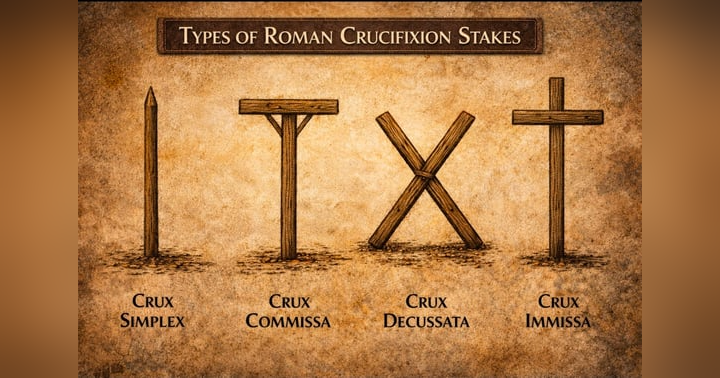
The Cross And Christianity